Your phone.
Your computers.
Your agents.
Send a task from your phone. Get back a trip plan, a supplier comparison or a working website.
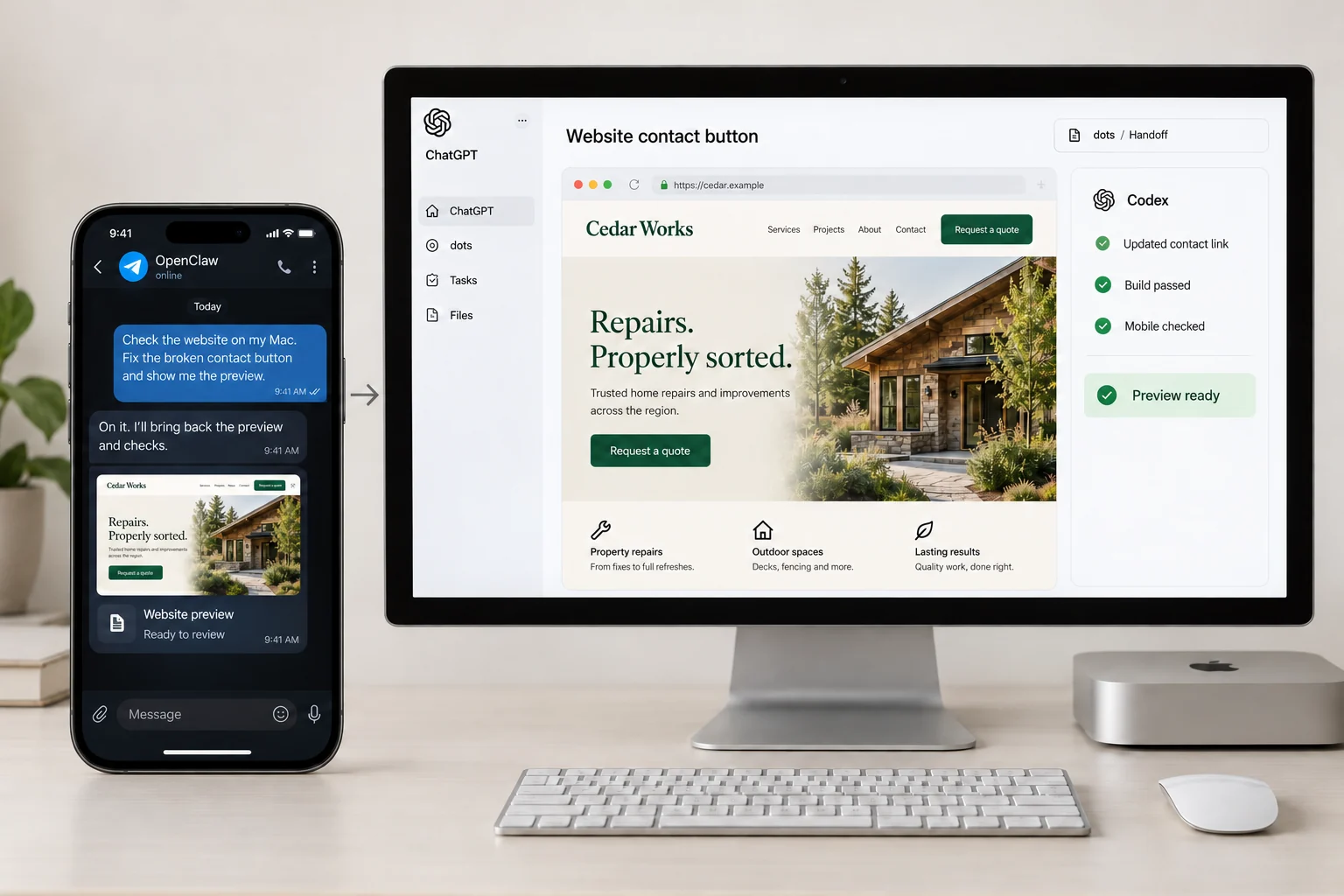
These illustrated assignments show the kind of work you can hand over. Pick a task, provide the right files and accounts, then review the result. The platform and connections depend on the job.
Muse has the tabs.
You have a weekend.
Give a personal agent the dates, the budget and the things you actually like. Ask for a short list with travel times, booking links and the reasons each place made the cut.
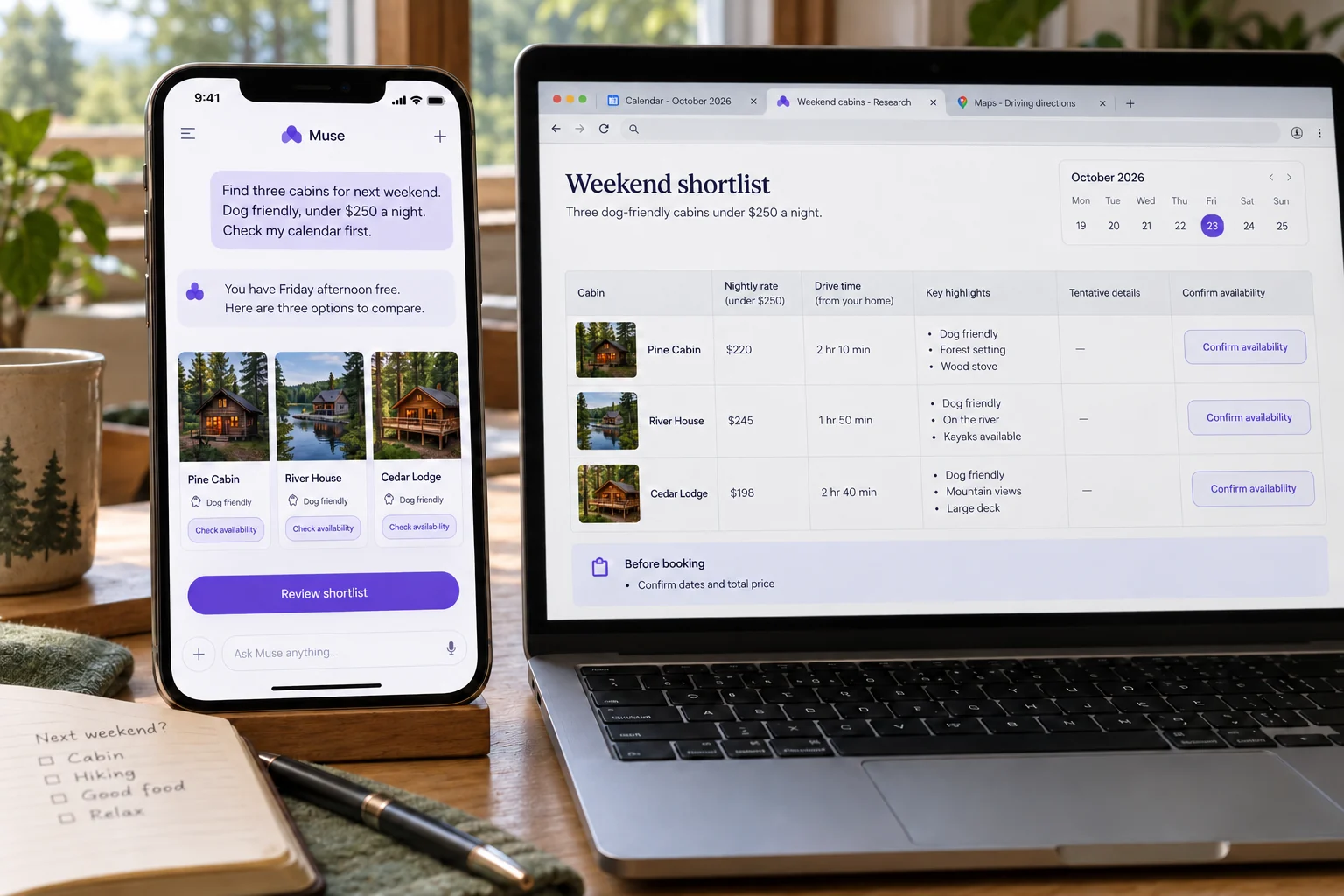
“Use the flight confirmation in my email. Find three places to stay and a rainy-day plan. Put the costs and links together. I’ll handle the booking.”
Same idea at home: a grocery list from a recipe, a family calendar tidy-up or the paperwork for the trip. At work: a research brief, organized meeting notes or a reply draft. The useful part is having something ready to check.
Grok did the homework.
You choose the supplier.
Three suppliers. Different prices, delivery terms and definitions of “included.” Ask an agent to put the same questions to each source and make a comparison you can read.
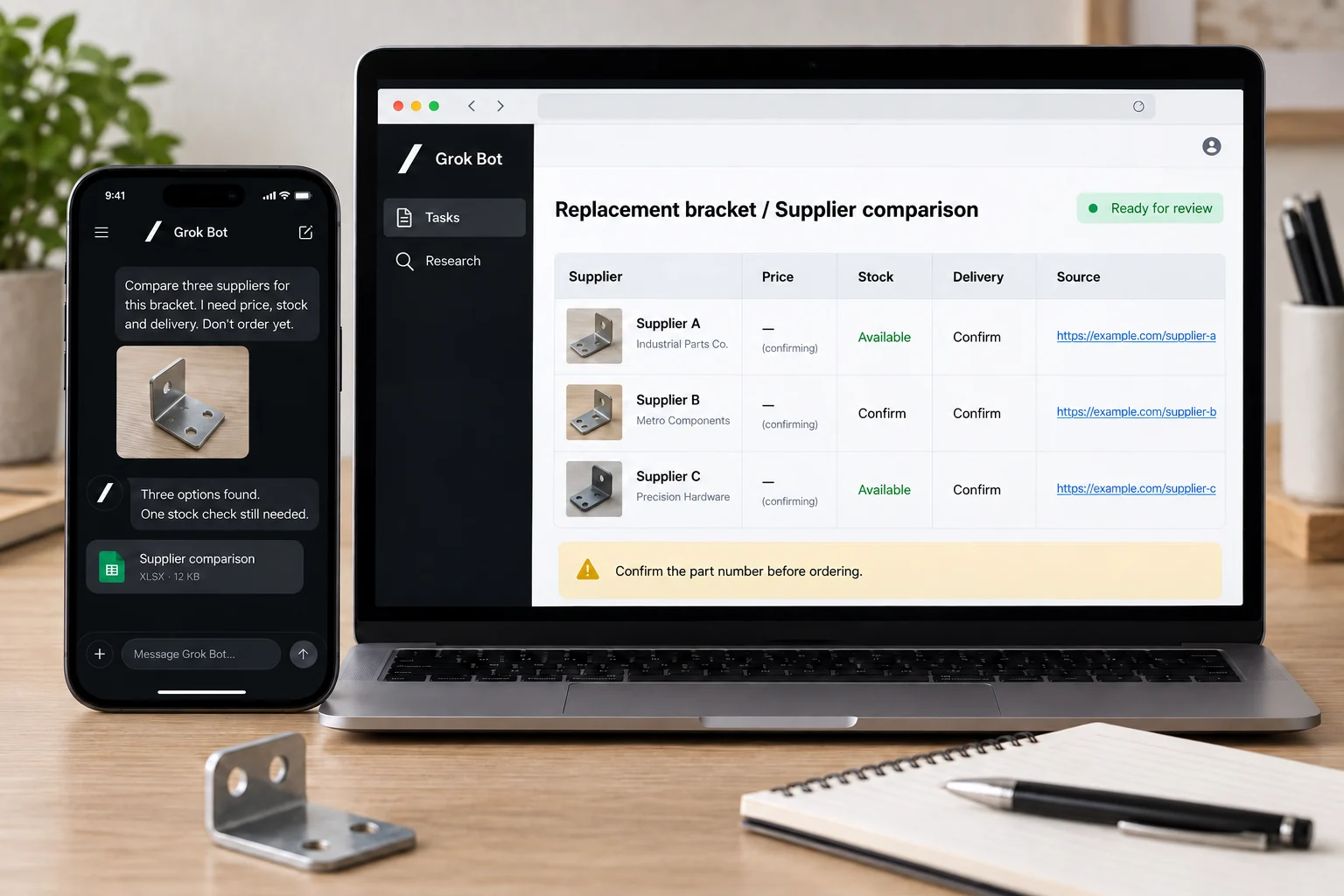
“Compare these three quotes. Check scope, freight and lead times. Link the sources. Flag anything you can’t confirm and draft my follow-up questions.”
The agent gets the digging. You get the decision. No creative writing in the delivery-date column, please.
Codex and Claude
built you something.
A useful agent can work in the files, run the checks and open the result. Ask for the new service page, the repaired form or the small tool your team keeps wishing existed.
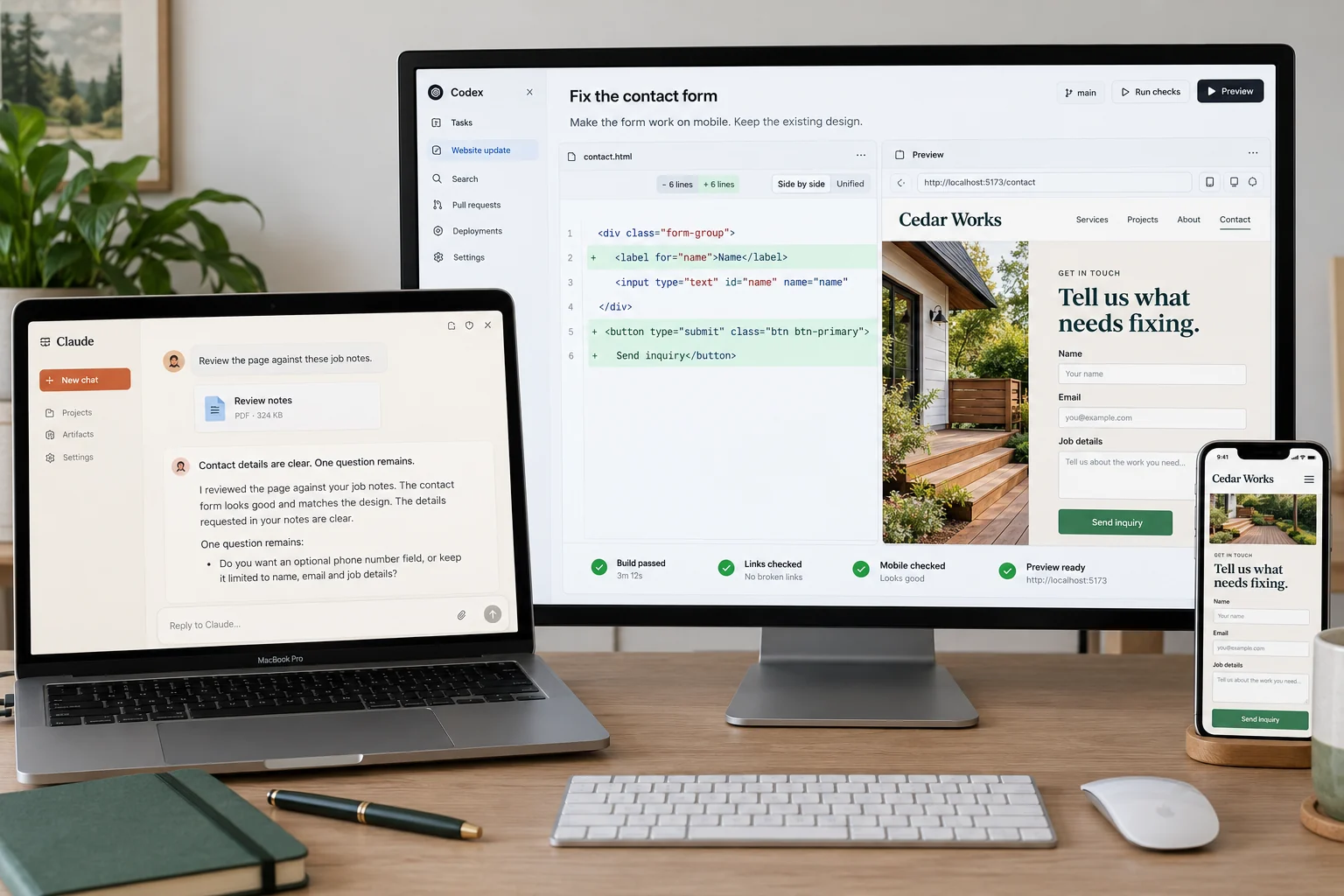
“Add the new service to our site. Use the approved notes. Check the links and the phone layout, then bring me a preview before publishing.”
One agent may be enough. Sometimes a second one is useful for a different part of the job. The point is a working result with checks you can inspect.
The phone is
part of the setup.
Our mix includes OpenClaw through Telegram, local Codex build-and-test work, Muse and OpenAI dots. Some tasks belong on the local computer; others suit an agent’s cloud workspace. We choose the tool and handoff around the work.
A message is the start. Files, checks and a result you can review are what make it useful. Our build notes show concrete outputs and what we checked.
Getting found.
Getting work done.
Google SEO helps people find your business. AI search covers how search-enabled ChatGPT, Gemini and Perplexity find and describe it. Agent setup is another job: helping software use your tools and do agreed work.
Choose the task first, then the tools and access it needs.
Pick tools for the job.
ChatGPT, Codex, Claude, Grok Bot, Muse, Hermes Agent and OpenClaw offer different ways to work. We check the access, devices and review points your assignment needs.