Use AI to organize
customer follow-up.
Find the next useful reply. Keep the stops and missing facts beside it.
An inquiry sheet can look busy while telling you very little about what to do next. One person needs photos. Another asked you to wait. Someone sent the form twice.
Give the agent the original records and clear rules. Ask it for a review list, with a source for each next step. Keep sending separate.
Ten receipts. Nine inquiries.
We used ten fictional receipts to test the small job: save a source-linked review list and draft only the replies that belong in it. No inbox or customer system was connected.
Read the records. Put a supplied overdue owner action first. Keep duplicates, contact stops, future dates, missing reply routes and conflicting descriptions visible. Draft useful questions where permitted. Don’t send anything or call an inquiry a sale.
Four drafts worth reviewing.
- INQ-05: a scope review was due October 31. The fixed practice review date is November 1. Open the actual scope draft before following up.
- INQ-01: fence photos are missing. Draft one request. INQ-02 is a duplicate receipt for this same inquiry.
- INQ-03: ask how to access the drainage area.
- INQ-04: ask for deck dimensions before preparing a scope.
One saved draft asks: Could you send a few photos of the fence and the posts? We can review the scope once we can see what needs repairing.
It doesn’t invent a price, an appointment or a promise to take the job.
Five inquiries stay out of the reply queue.
- INQ-06: explicitly stopped. No draft.
- INQ-07: closed, with no further contact requested.
- INQ-08: asked for contact after November 5. Keep it held.
- INQ-09: no verified reply route. Don’t guess an address.
- INQ-10: the form says sidewalk, the note says deck. Ask the owner which is right.
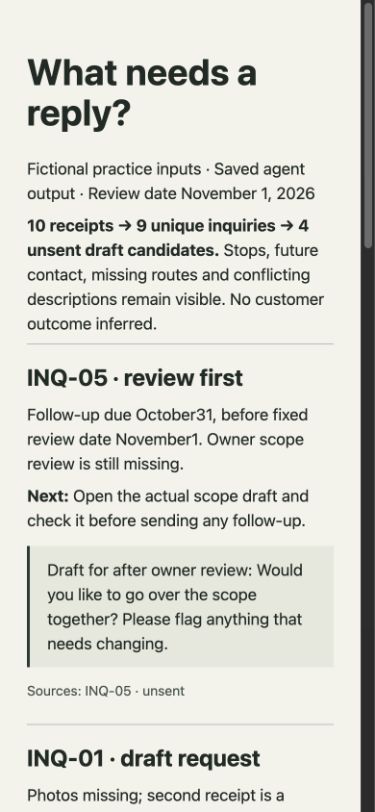
Inspect the records and checks
Save the fictional receipts, actual agent review output and acceptance checker together. Run python3 verify.py; the practice instructions explain how to repeat it.
The check reopens the files, verifies the exact input hash, accounts for every receipt and checks duplicates, stops, holds and unsent drafts. A person still reviews the reasoning and wording. This local example establishes no recovered leads, conversion gain or customer result.
One gap. One next action.
A useful list tells the person doing follow-up what to check before contacting anyone. Keep the source records intact, and carry a refusal or contact-after date into every later review.
Start with a copy of a few approved records. Remove private details the task doesn’t need. Check each proposed reply against its source, then decide whether to use it.
What could the connected workflow look like?
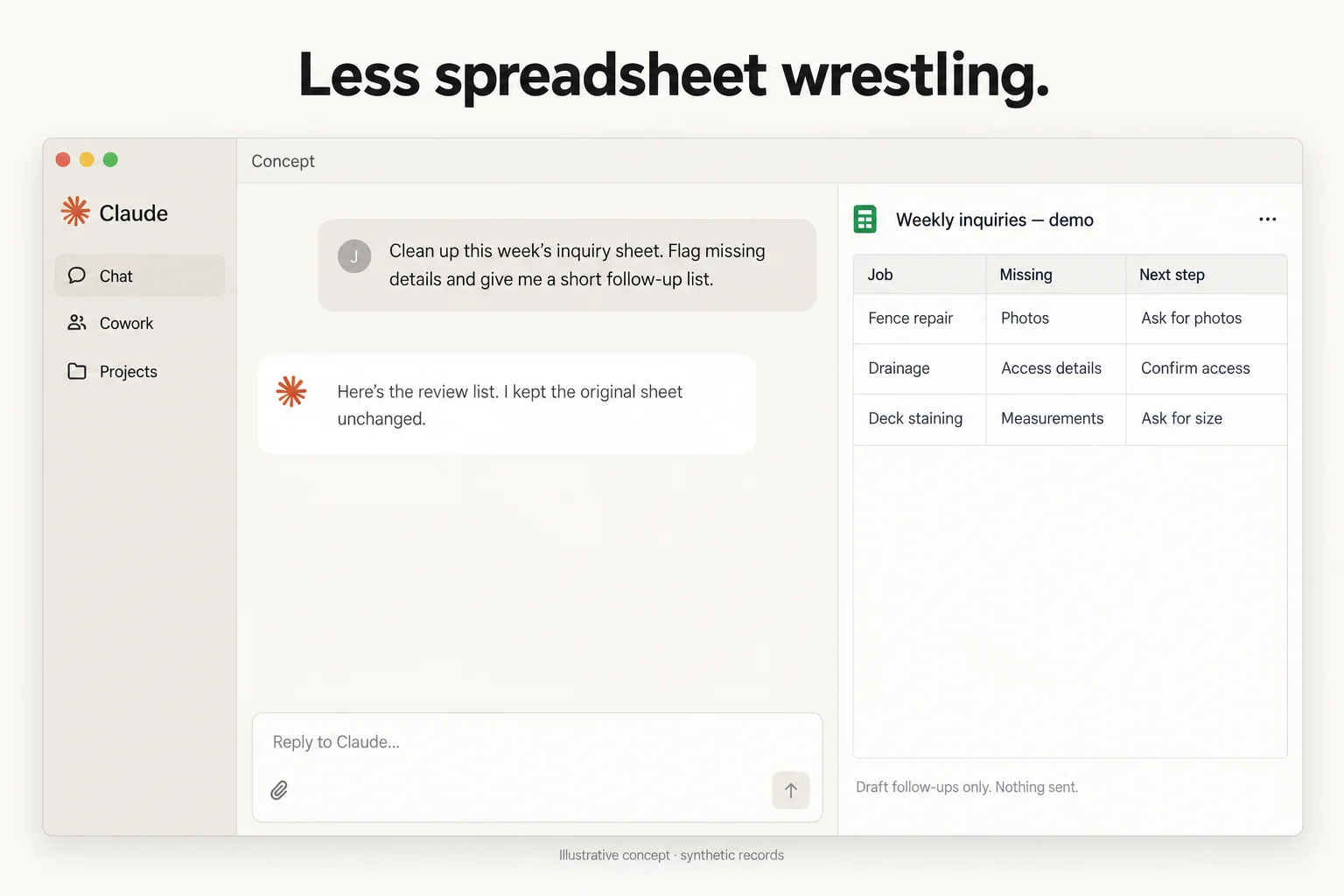
This earlier illustration shows the idea. The practice files above show the local source and output we checked. Connecting your inbox or CRM is separate work.
Want to try one task yourself? Prepare a short business brief or use the free Agent Kit.