Let the evidence talk.
A useful agent report separates activity, actual inquiries and the gaps in between.
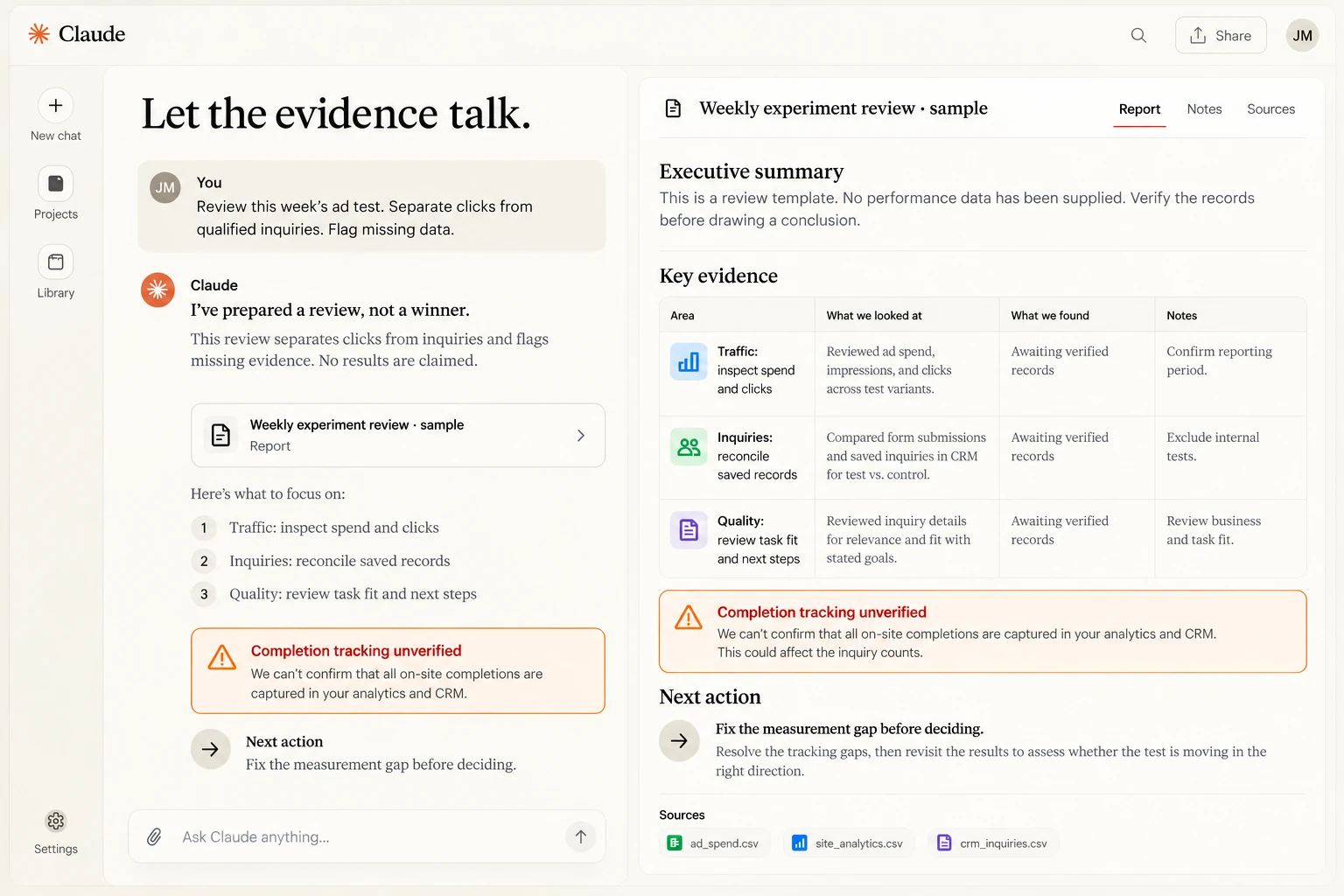
Clicks are interesting. A real inquiry is more interesting. A suitable job is more interesting still.
Have the agent organize those separately. Ask where each figure came from, what period it covers and what’s missing. If the tracking is broken, the useful answer might be “we can’t tell yet.” That’s better than a confident graph.
Follow the inquiry, not just the click.
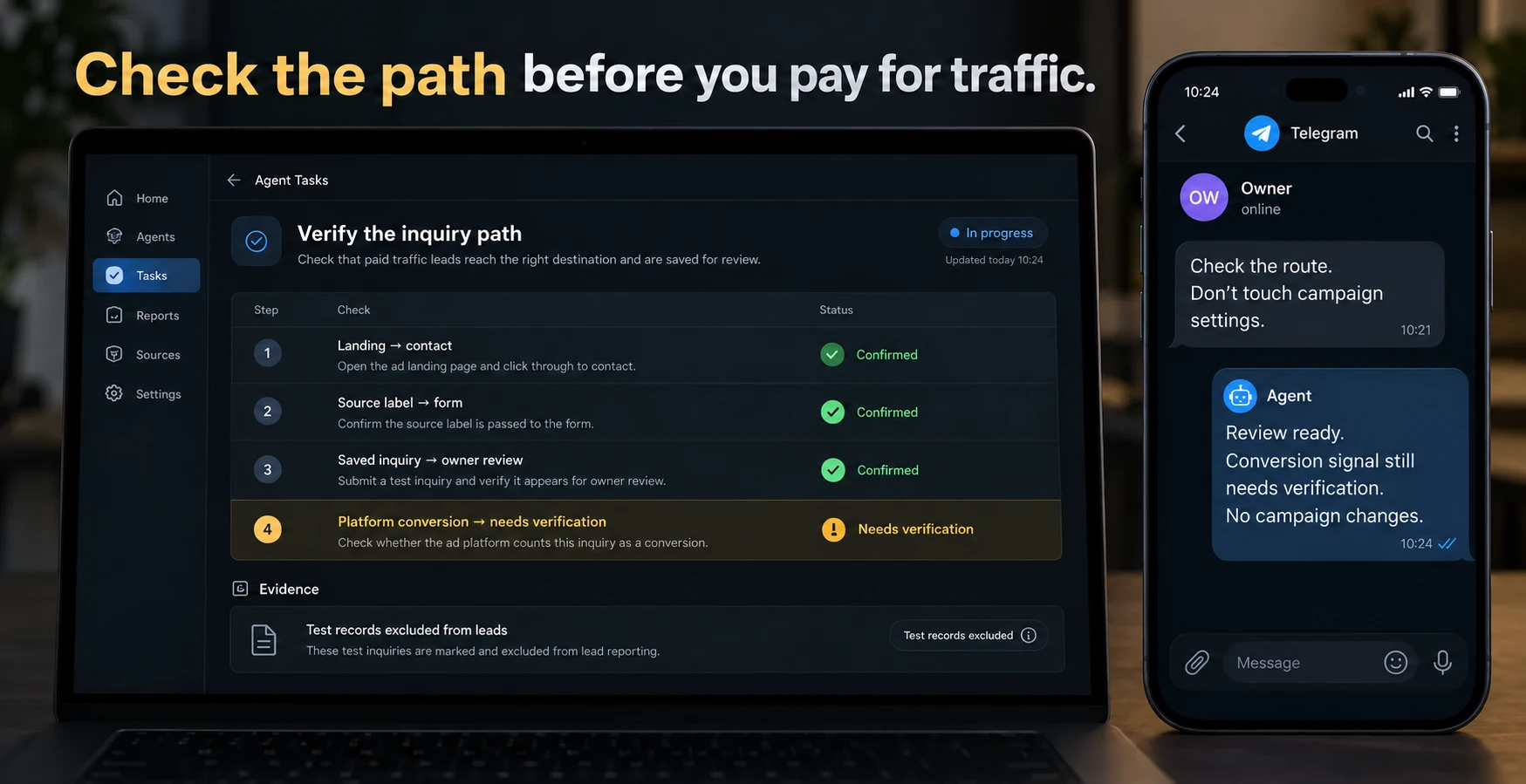
Review the landing page, contact route, saved response and the owner’s next step. Test records stay out of lead counts. Source labels help reconcile records; they don’t prove an ad click or a platform conversion.
Our own loose end.
Our October 10 internal test saved a synthetic inquiry with its URL source label and confirmed its notification. It did not emit a verified Google Ads conversion. Booking attribution also remained unverified. We’re keeping those facts separate rather than turning a setup check into a success story.
A weekly review can collect the evidence and suggest one next action. You decide whether to keep testing, fix the route or stop. No automatic bid or budget increases hiding in the report.