Agentic Worker Bees
A color book, five business-card directions and a cleaner rose. A small flower-shop project shows what happens when an AI agent can work on the files, not just talk about them.
Fátima’s Flowers needed a color reference for arranging bouquets. We made a ten-page book: twelve palettes, sixty named swatches, flower suggestions and room to plan. A reference to reach for at the workbench.
Soft classics
01 Blush & cream
Soft tones + neutral
- Blush
#E6B6BD - Petal pink
#F2D4D6 - Cream
#F5E8CF - Sage
#A3AC97 - Deep leaf
#52644F
Quiet, sweet and light. A neutral makes pale pink feel deliberate.
Build it: Lead with blush or cream; repeat one shade, then leave room for soft greenery.
Flowers to try: Blush roses; pale pink lisianthus; cream carnations; eucalyptus.
Finish: Try a clear glass bud vase or a warm cream vessel.
02 Peach & apricot
Neighboring hues
- Peach
#F0C4AA - Apricot
#EBAA72 - Butter
#EACF87 - Ivory
#F5ECDC - Olive
#76815B
Warm without becoming loud. Neighboring warm colors blend easily.
Build it: Let peach lead, add a smaller apricot group, then soften the edge with ivory.
Flowers to try: Peach roses; apricot ranunculus; cream spray roses; olive-toned foliage.
Finish: Keep the vase simple so the warm petals stay in charge.
Then came the useful part: feedback.
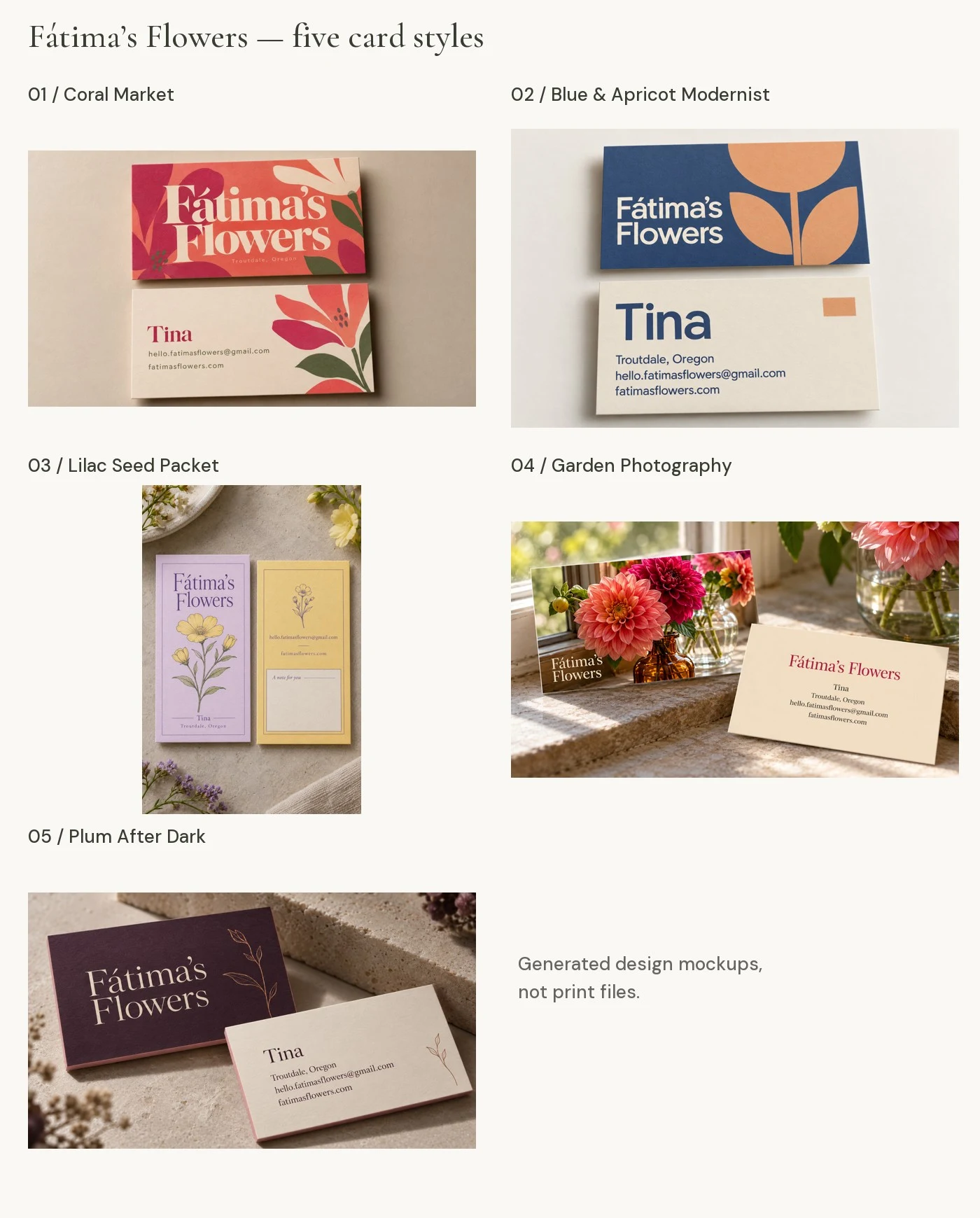
The first business cards weren’t it. So we went back to real print references and made five genuinely different directions: bright Coral Market, Blue & Apricot Modernist, Lilac Seed Packet, Garden Photography and Plum After Dark.
The rose artwork needed another pass too. Less dense shading. Cleaner outlines. Keep the warmth and the lettering, but give the name some breathing room.
We made cleaner versions of the round, square and horizontal logos, kept the originals and checked the results. The business cards are still design options to choose from.

The conversation can become the work.
This project ran through OpenClaw and Codex: requests and corrections in chat, then work on files, images and review PDFs. The useful part is the path from “try this” to something you can open, inspect and change. Feedback can become the next version, without starting over in another app.
Meta’s Muse offers another Mac-capable approach. Its official computer-use guide connects Meta models to Mac tools. We could configure that kind of setup on a dedicated FRM Mac mini; it wasn’t the system used for this flower project. Either way, the aim is the same: describe the task, let the agent work with the right tools, and review what comes back.
You don’t have to become a prompt engineer to say the rose looks wrong. For a small business, that’s the appeal: usable work to react to, and a way to keep improving it.