Save the rewrite. Teach the right lesson.
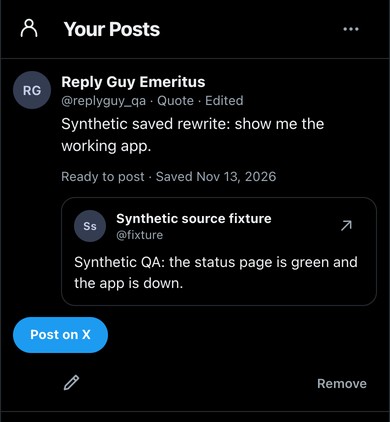
If I replace most of a suggested post and save it, the computer shouldn’t congratulate itself on the first draft.
Same subject, different words. Those are different pieces of feedback.
That’s one change in BoomScrolling, where you read a post, try a response and keep what you mean. A heavy rewrite now gives the original writing pattern less credit. The words you chose still count.
Remember better. Assume less.
Recent likes and passes carry more influence than old ones. A draft you liked months ago shouldn’t become a permanent assignment. And the same trait shouldn’t get several votes just because it has several labels.
The writer chooses examples more carefully too. When you’ve supplied your own writing, a technical reply can draw on relevant, varied examples instead of your latest sports joke. Your words stay separate from generated drafts you liked.
Discovery gives unfamiliar approaches a chance ahead of well-rejected ones. Source suggestions also learn from topics and known authors, with separate signals for finding a post interesting and finding a draft useful. Repeated views help space returning posts.
Scrolling past stays an unanswered question. Maybe the draft missed. Maybe you were interrupted. I don’t want the computer recording a strong opinion I never had.
In The Human Use of Human Beings, Norbert Wiener wrote that “feedback is a method of controlling a system by reinserting into it the results of its past performance.”
The tricky part is deciding what the performance was. Did the draft work, or did you rescue it?
We checked a small replay of earlier choices and synthetic cases. One extra ranking rule made the replay worse. We took it out. Fresh use still has to show whether the next draft is better.
Home stays newest first. The writing model keeps its weights, and you still choose what to publish. We’re improving how material and examples get selected.
Saving my rewrite shouldn’t give the first draft a medal.